Discarding the Moldy Top Layer of Silage Is Not Enough: The Invisible Threat of Mycotoxins
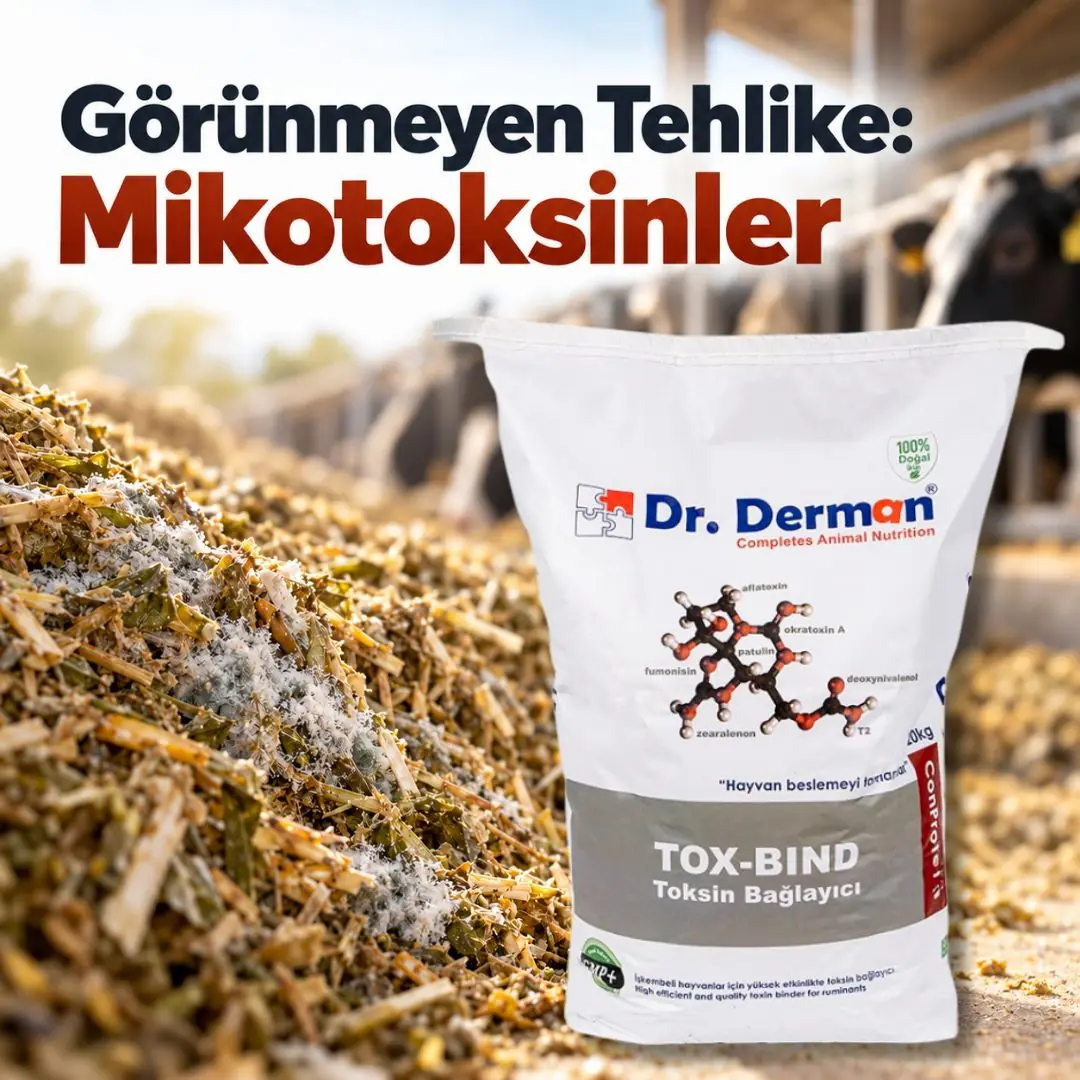
It is not possible to completely prevent mycotoxins, but it is possible to reduce their effects on the animal. Mycotoxin binders come into play here.
If you are saying, “I’m throwing away the moldy part, the bottom is clean”
Discarding the moldy top layer of the silage and feeding the bottom part to the animals may not mean you have gotten rid of mycotoxins. You can see mold with the naked eye, but you cannot see the mycotoxins produced by molds, nor can you tell by their smell. Removing the moldy part is a good practice, but it does not show that the rest of the feed is completely safe.
The risk is not limited to silage alone. Inappropriate moisture, temperature, and storage conditions in corn, barley, wheat, compound feeds, and other raw materials also increase the risk of mycotoxins.
What happens when mycotoxins reach the animal?
Depending on the type and amount of the toxin, the following problems may be observed:
- Decrease in feed intake
- Digestive problems
- Immunosuppression
- Decline in milk and live weight performance
- Estrus and conception problems
Producers often see the performance loss, but may fail to notice the invisible reason behind it.
It carries special importance for dairy farms
Some aflatoxins taken in with feed can pass into milk after being metabolized. Therefore, producing high-quality and safe milk starts at the feed trough, not in the milking parlor.
What is Dr. Derman Mycotoxin Binder?
Dr. Derman Mycotoxin Binder is a comprehensive product developed to support the management of mycotoxin risk in the ration.
Its formulation contains: bentonite, activated carbon, prebiotics, probiotics, calcium propionate, live yeast, vitamins, organic-inorganic minerals, and MOS.
This versatile structure helps reduce the negative effects of mycotoxins while contributing to the support of the digestive system, intestinal environment, and immunity. It also offers protective support against the risk of sudden and severe poisoning that can be caused by the high toxin load that may be taken in with feed.
Usage amounts
| Animal | Preventive use (daily per animal) |
| Dairy and beef cattle | 25–30 g |
| Sheep and goat | 2,5–3 g |
In cases where the mycotoxin load is high, the usage amount should be doubled.
Remember
Using a mycotoxin binder does not mean that molded and spoiled feed can be fed to the animal. Proper control is the joint application of the following elements:
- High-quality feed raw material
- Proper storage
- Good silage management
- An effective toxin control program
In animal husbandry, you see some losses with your own eyes, while you can only see the results of others. If you want to protect your herd against the invisible risk of mycotoxins, you can consider Dr. Derman Mycotoxin Binder in your ration.