6 Things to Check If Egg Production Drops in Winter
The saying “the hen has stopped laying” is heard every November. The days are getting shorter, the weather is cooling, and the hen is slowing down. Some of this is normal, and we have to accept it. However, it is wrong to attribute the entire decline to the season. Part of the yield is lost due to winter, but some is lost due to deficiencies in the coop, and that part can be recovered.
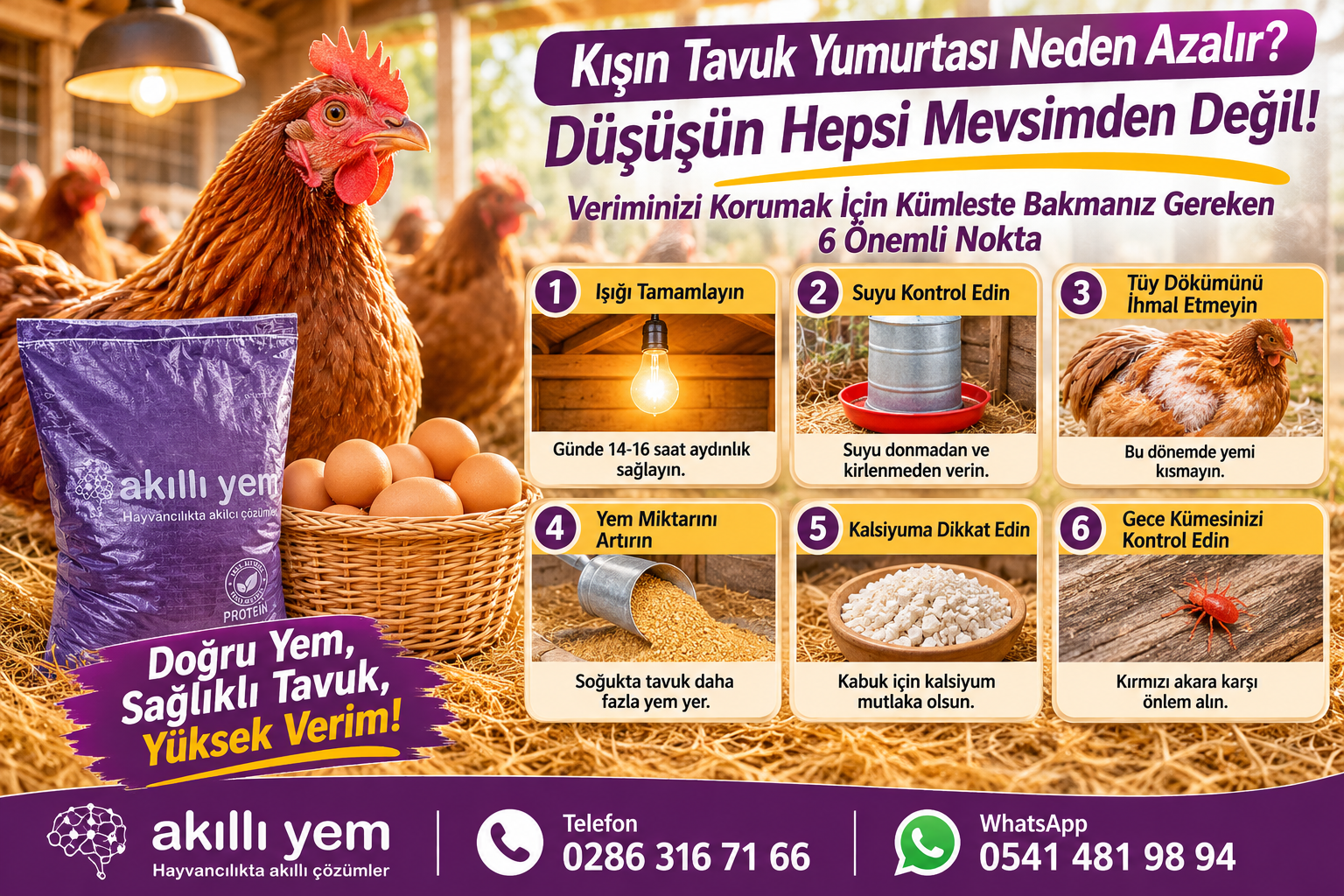
1. Supplement the light
Hens need 14-16 hours of light per day to lay eggs. In November, the day drops to about 10 hours, and in December to around 9 hours. When light is insufficient, the ovary slows down. Install a bulb in the coop and supplement the total to 14-16 hours, including daylight. It is easier to provide the light in the early morning. If you turn it off suddenly in the evening, the hens will be left in the dark before they can get to their perches. Whichever you choose, keep the time consistent. Turning it on one day and forgetting the next will lower the yield again.
2. Check the water first thing in the morning
A waterer that freezes at night leaves the hen thirsty from morning until evening. A large part of an egg is water; a hen with restricted water will stop eating feed first, then stop laying eggs. Check the water several times during the day in winter to ensure it does not freeze or get dirty. If the weather is very cold, providing lukewarm water increases consumption.
3. Do not mistake molting for an egg production stop
Hens over a year and a half old molt in the autumn. During this time, egg production stops because the hen spends the protein she consumes on new feathers rather than eggs. Molting lasts for a few weeks, sometimes two or three months. The most common mistake is to cut back on feed during this period. If feed is restricted, feathers grow back slowly, and the return to egg production is delayed. Also, take a look at the flock; are there old hens that are molting and haven’t laid eggs for months? If so, cull them.
4. Review the amount of feed in the cold
When the weather gets cold, the hen eats more feed to keep warm. If you keep the feed at summer levels, the energy goes to keeping warm, not to the egg. Do not let the feeder stay empty; monitor daily consumption.
There is one more thing for free-range hens. The feed they get from pasture, insects, and seeds in the summer runs out towards winter. It is often forgotten that a hen that lays eggs with little feed in the summer becomes entirely dependent on the feed bag in the winter. The feed provided must be increased accordingly.
5. Check calcium if the shell has thinned
If the shell has thinned or broken eggs have increased, the first place to look is calcium. A hen that lays one egg a day spends about 2 grams of calcium just for the shell. In hens fed with wheat and corn, this deficit grows rapidly. Layer feed meets the calcium requirement. If you are feeding with grain, keep limestone or oyster shells in a separate container, and the hen will take as much as she needs.
6. Check the coop at night
Red mites are not visible during the day. They wait in the cracks under the perches and nesting boards, and suck the hen’s blood at night. The hen cannot sleep comfortably, she appears pale and restless in the morning, and egg production drops. Take a flashlight one night and look at the cracks in the perches and under the nests. If you see small, reddish-gray moving insects, seal the cracks and plan the treatment with a veterinarian.
Stresses such as changing the location of the coop, adding new hens, or the presence of dogs or wild animals also stop egg production for a few days. Try not to disrupt the coop routine.
Which feed should you give and how?
There are two ways regarding feed. If you have your own grain, you can mix Akıllı Yem 25 HP Concentrated Chicken Layer Feed with corn or wheat grits. It contains 25% crude protein and is 100% vegetable-based. It does not contain antibiotics or hormones and includes EU-approved live yeast, prebiotics, organic minerals, and vitamins. The mixing ratio changes according to the age of the hen:
| Age range | 25 HP Chicken Layer Feed | Corn / wheat grits |
|---|---|---|
| 10-17 weeks | %40 | %60 |
| 17-20 weeks | %45 | %55 |
| 20-80 weeks | %50 | %50 |
If you do not want to mix or if you have a small number of hens, we have pelleted complete feeds. You can give Akıllı Yem 18 HP Pelleted Layer Chicken Complete Feed on its own, approximately 100-110 g per head per day. For free-range hens, Akıllı Yem 16 HP Pelleted Free-Range Chicken Complete Feed is also given in the same amount. As the feed they find in the open decreases, consumption will increase, so monitor the amount and adjust accordingly. When changing feed, mix it with the old feed for a week during the transition.
These ratios and amounts are examples. We prepare custom recipes for your business based on the grain you have and the number of your hens. Shipping is free throughout Turkey, even for a single bag.
Conclusion
Egg production decreases a little in winter, which is normal. But do not just say “it’s the season” without checking the light, water, feed, calcium, and the coop. If these are in order and egg production is still dropping, let’s discuss your ration together. For free feeding consultancy;
Our information line: 0286 316 71 66 / 0541 481 98 94