The First 21 Days Post-Partum: Why Do Milk Fever and Ketosis Occur?
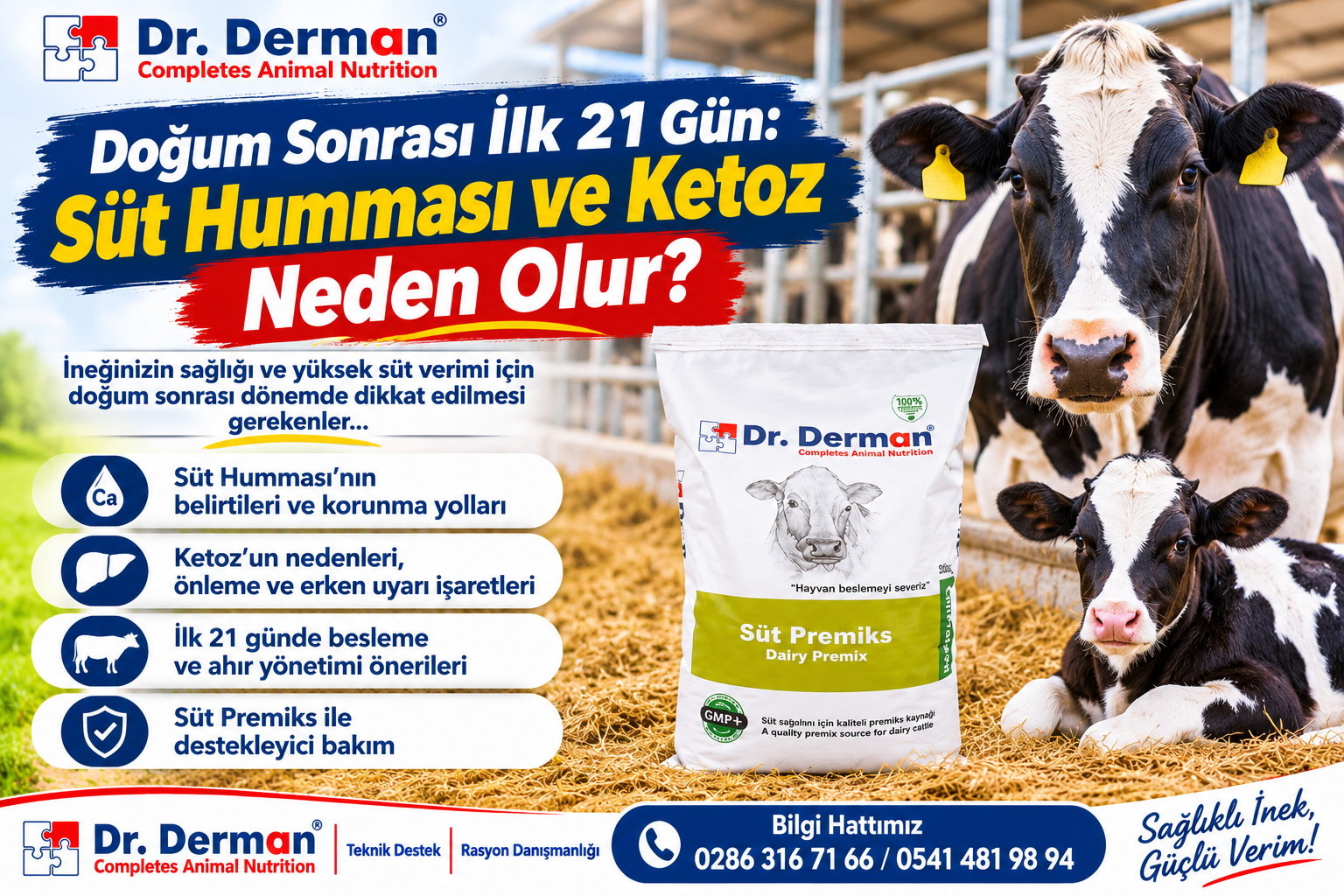
In the first weeks after calving, a cow’s milk yield increases rapidly, while feed intake and energy intake cannot keep up with this pace. If this deficit is not closed, milk fever, ketosis, and delayed estrus follow in sequence. We have written about what to look for in the barn during the first three weeks post-partum.
A high-yielding cow that has just calved begins producing milk immediately, but feed intake does not increase at the same rate. She meets the energy required for milk from body fat and the necessary calcium from body stores. These two deficits set the stage for two major post-partum problems: milk fever and ketosis. Both can be managed if detected at the right time, but if delayed, they result in the loss of the animal and milk production.
Milk fever: the first three days
With calving, large amounts of calcium pass into the milk, especially colostrum. Blood calcium drops rapidly, and if the cow cannot recover this quickly enough, milk fever (hypocalcemia) begins. Most cases are seen within the first two to three days after calving. First, there is loss of appetite, shivering, restlessness, cold ears, and stumbling while walking. Then, the cow cannot stand up and lies on her side.
This is an emergency. If the cow has gone down, do not wait; call a veterinarian immediately. Treatment is usually intravenous calcium administration, and the risk of loss increases the longer it is delayed. This condition cannot be corrected with feed or premix.
More common are cows that do not go down but remain standing while their blood calcium remains low. These go unnoticed but eventually manifest as problems such as retained placenta, metritis, displaced abomasum, ketosis, and delayed estrus. Prevention begins in the dry period. The calcium and cation-anion balance of the ration, magnesium adequacy, and Vitamin D should be established with a ration expert. A high-calcium ration during the dry period can make the calcium mechanism lazy, so do not say “the more calcium, the better.”
Ketosis: from the first weeks onwards
When the energy deficit grows after calving, the body begins to use body fat. If the liver cannot process this fat, ketone bodies increase in the blood, and ketosis occurs. The cow first stops eating concentrate feed, then milk production drops, and weight loss accelerates. Sometimes there is a smell of acetone in the milk or breath. A rapid ketosis test performed with milk or urine on a cow suspected of having ketosis provides an initial idea; consult a veterinarian for a definitive diagnosis.
The biggest risk for ketosis is entering calving too fat. Do not excessively increase the cow’s body condition during the dry period; aim for her to enter calving in medium-good condition. It is also important to boost feed intake after calving. Provide high-quality and fresh forage, ensure the feed bunk is never empty, keep clean water in front of her at all times, and reduce crowding and stress in the pen.
Where does Süt Premiks come into play during this period?
Dr. Derman Süt Premiks is given to dairy cows at 50 g per day (25 g in the morning, 25 g in the evening) by mixing it with feed. Some substances in its content are related to problems that arise during this period. Vitamin D helps support the calcium balance. Niacin and protected choline are included in the ration to support the liver of a cow experiencing an energy deficit in early lactation to process fat and reduce the risk of ketosis. Live yeast and sodium bicarbonate help balance the rumen.
Süt Premiks is a feed additive product, not a medicine. It does not treat a cow that has milk fever or has entered ketosis. It is not a solution on its own without a correct dry period ration, post-partum feed intake, and proper barn management. Its role is to be a regular vitamin and mineral support added alongside these practices.
What should be checked in the barn in the first 21 days?
For the first three days after calving, every cow should be checked twice a day: is she standing, is she coming to the feed bunk, is there shivering or stumbling? Note when she passes the placenta; if it takes longer than 12 hours, notify the veterinarian. From the second week onwards, perform ketosis tests on cows whose feed intake has dropped or whose milk production has unexpectedly decreased. If there is foul-smelling discharge from the uterus, fever, or loss of appetite, have her examined without delay. If you keep these records, you will not repeat the same mistake in the next calving.
Let’s review your dry period and post-partum ration together. Report your cow count, the feeds you use, and the problems you have experienced post-partum, and let our technical team evaluate the place of Süt Premiks in your ration with you. For free animal nutrition consultancy: 0286 316 71 66 / 0541 481 98 94. You can order the product via yemsiparis.com or find the nearest dealer on the dealer map.